American Flag and Eagle – A Designer's Review
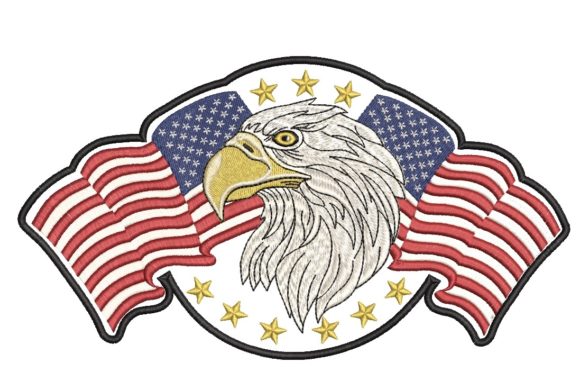
When I first opened the American Flag and Eagle machine embroidery file, I was honestly curious how the balance would land. Patriotic themes can swing either toward bold and graphic or overly intricate, and neither extreme works well for real projects. This design sits somewhere in the middle, and that is a good thing. The eagle carries weight without feeling stiff, and the flag wraps around the composition in a way that feels intentional rather than crowded. The mood is confident, classic, and straightforward. It does not try to be cute or trendy, which means it has staying power for seasonal products and year-round custom apparel.
From a designer's perspective, this is the kind of embroidery file that makes you think about placement before you even load it into the hoop. The shape is substantial enough to anchor a garment back or chest, but it also works well as a centered focal piece on a tote bag or apron. The visual personality leans Americana, but not in a kitschy way. It feels more like a design you would see on a well-made boutique jacket or a limited-edition holiday gift, not a mass-produced souvenir. That distinction matters when you are selling finished products or building a brand around handmade quality.
First Stitch Impressions and Real Fabric Behavior
I tested the American Flag and Eagle design on a medium-weight cotton twill tote bag first, because that is a fabric I use often for custom orders. The stitchout was clean, with no pull or puckering around the flag stripes. The satin stitch columns in the flag area held a crisp edge, and the fill stitches in the eagle body laid down smoothly without any gaps. I noticed the design uses a mix of satin stitch and fill stitch, which gives it texture without making the stitch density too high. That balance is important for projects that will see regular use, like tote bags, aprons, and hoodies.
I also ran a test on a lightweight denim jacket, which is one of the recommended fabrics in the product description. The design handled the fabric texture well. The needle penetration was consistent, and the thread colors popped against the blue denim without needing heavy contrast adjustments. If you are stitching this onto a dark fabric, I would recommend checking your thread color contrast beforehand, especially in the eagle area where darker fills can blend into a black or navy background. A quick test on scrap fabric will save you from unpicking later.
One of the things I appreciate about this machine embroidery design is that it does not rely on tiny details that disappear after washing. The stripes are wide enough to read clearly, and the eagle silhouette is bold enough to hold its shape even on textured fabrics like fleece or sweater knits. That makes it a strong candidate for sweatshirt embroidery and custom hoodies, where stitch clarity can be a challenge with overly dense designs.
Where This Design Shines in Real Projects
After stitching it out a few times, I started thinking about which products would benefit most from this embroidery file. The first thing that came to mind was custom apparel for small businesses and Etsy sellers. A well-placed eagle and flag on the back of a denim jacket or the front of a heavyweight hoodie has a strong visual payoff. Customers looking for patriotic gifts, personalized gear, or holiday merchandise respond well to designs that feel substantial without being overwhelming.
I also see this working beautifully as an embroidered patch before stitching directly onto a garment. If you sell at craft fairs or run a small shop product line, stitching this design onto twill or felt and finishing it as a patch gives you flexibility. Patches can be applied to bags, caps, jackets, or even framed as decor. The design's shape and density support patch construction well, especially if you use a tear-away stabilizer and a tight satin stitch border.
For baby embroidery and children's items, I would be more selective. The design is not overly large, but the patriotic theme and eagle imagery might feel more appropriate for older kids or adults. That said, a small-scale version on a toddler's denim shirt or a custom baby blanket could work if the recipient's family has a strong connection to the theme. Just be aware that smaller hoop sizes may require scaling down, and you will want to check stitch density to avoid making the flag stripes too narrow.
Other strong product fits include pillow covers, kitchen towels, aprons, and tote bag designs. For pillow covers, the design's centered composition works well on a 12 by 12 or 14 by 14 inch front panel. On kitchen towels, I would place it lower on the fabric, away from the fold line, so it sits flat during stitching and stays visible when the towel is hung. The design holds up to washing, but I would recommend using a quality stabilizer and testing thread tension on terry or linen blends before committing to a batch.
Practical Considerations for Apparel and Accessories
If you are planning to use this embroidery design on caps or hats, take extra care with placement. Curved surfaces can distort designs that have straight horizontal lines, like flag stripes. I recommend hooping a cap with a curved field cap hoop and checking that the stripes align with the hat's natural curve. A slight rotation or repositioning can make the difference between a professional finish and a warped look. The same caution applies to layered garments like lined jackets or hoodies with thick seams. Make sure your needle can penetrate all layers cleanly, and use a sharp embroidery needle in the correct size for your fabric weight.
For dark fabric projects, thread color contrast is critical. The design uses a mix of red, white, blue, and gold tones. Against a black or dark navy background, the white and gold areas will stand out well, but the blue fill may disappear. I would test a small section first, or consider swapping the blue thread for a lighter shade if the background is very dark. This is a simple adjustment that can save a whole batch of finished products from looking muddy.
Stitch density is another factor worth reviewing before you start a production run. The American Flag and Eagle design has moderate density, which is good for most fabrics, but if you are stitching on thin fabric like lightweight cotton or silk, you may need to use a cutaway stabilizer to prevent show-through. On stretchy fabric like jersey or performance wear, a stabilizer with some grip will help keep the design from distorting. I always recommend testing on the actual fabric you plan to use, especially if you are selling the finished product to customers.
Visual Appeal, Customer Trust, and Product Value
When a customer buys a handmade product with an embroidered design, they are paying for quality and attention to detail. The American Flag and Eagle design delivers a professional look that builds trust. The flag stripes are straight and even, the eagle has enough detail to feel artistic without being fussy, and the overall composition is balanced. That adds perceived value to any personalized gift or custom apparel item you produce.
For Etsy sellers and small shop products, this design works well in printable mockups and design assets for listings. A clean mockup showing the design on a denim jacket or tote bag helps customers visualize the finished product. I have found that listing photos with real embroidery samples outperform flat digital previews, so stitching out a sample for photography is worth the time. If you sell digital embroidery files rather than physical products, including a high-quality mockup and a clear description of recommended fabrics and hoop sizes will help buyers feel confident in their purchase.
The design also supports brand consistency if you are building a themed product line around holidays or American heritage. Whether you are creating holiday gifts, wedding gifts, or boutique products for a local shop, having a reliable patriotic design in your library gives you a repeatable option for seasonal orders. Customers often return to sellers who deliver consistent quality, and this design is dependable enough to become a staple in your rotation.
Designer Notes for Commercial and Personal Use
Before you start stitching, here are a few practical checks I recommend based on my experience with this embroidery project:
- Test on scrap fabric first. Even if the design looks great on screen, fabric behavior can surprise you. Run one test on a fabric similar to your final product.
- Check thread color contrast. Light fabrics will show the design clearly, but dark fabrics may need thread color adjustments. Test a small section before committing.
- Review stitch density. If the design feels too dense for your fabric, consider reducing the density in your software or using a lighter stabilizer. Moderate density is usually safe, but every fabric is different.
- Confirm hoop size. Make sure the design fits comfortably within your hoop with room for stabilizer and fabric. A tight fit can cause shifting during stitching.
- Inspect small details. Look at the eagle's head and wing edges. If any details are too fine for your fabric, you may need to scale the design up slightly or simplify the stitch path.
- Test in black and white mockups. This helps you see the design's shape and readability without being distracted by color. If it reads well in grayscale, it will read well in color.
- Compare light and dark fabric backgrounds. The same design can look completely different on white versus black fabric. Stitch out both to see which version you prefer for your product.
- Use proper stabilizer. Cutaway stabilizer for knits and stretch fabrics, tear-away for wovens and stable materials. A good stabilizer prevents puckering and keeps the design crisp.
- Check licensing before selling. If you are using this design for commercial embroidery or selling finished products, confirm the license terms. Some digital embroidery files come with restrictions on resale or production volume.
These steps may seem basic, but skipping them is the fastest way to waste thread and fabric. I have learned that lesson the hard way more than once. A few minutes of testing saves hours of rework, especially when you are producing for a client or a batch of craft business inventory.
Final Thoughts on the American Flag and Eagle
The American Flag and Eagle design is a solid addition to any embroidery library, especially if you create Independence Day products, custom apparel, or handmade gifts with a patriotic theme. It stitches cleanly, reads well on a variety of fabrics, and offers enough visual impact to elevate a simple garment into a standout piece. It is not a design that tries to do too much, and that restraint is exactly what makes it useful for both personal projects and commercial work.
If you are an Etsy seller looking for a reliable patriotic design, a small business owner building a seasonal product line, or a hobbyist who wants to stitch something meaningful for a family member, this machine embroidery design is worth your time. Just remember to test your fabric, check your hoop size, and review the thread colors before you start. A little preparation goes a long way toward a finished product that looks professional and feels durable.
I have added this embroidery file to my active rotation, and I expect it will be a go-to option for flag-themed orders and custom projects through the summer and beyond. Whether you stitch it onto a sweatshirt embroidery piece, a tote bag design, or a personalized gift for a customer, it delivers the kind of clean, confident result that keeps people coming back to your shop.